
Chromakey Photography Backdrops Explained: Everything You Need to Set Up a Pro Green Screen Studio
May 2, 2026
Behind every great image is a perfect backdrop.
Introduction
Walk into any professional photography studio worth its name and you will notice one thing pretty quickly: the backdrops are not an afterthought.
They are not a cheap roll of paper jammed against a wall. They are not a printed vinyl sheet with a faded digital design from a couple of years ago. They are carefully chosen, thoughtfully lit, and clearly selected by someone who understood — at a real level — that the background is not separate from the photograph. It is part of it.
Choosing the right muslin studio backdrop is one of the most important decisions a photographer can make for their studio. It affects the mood of every single image you produce. It shapes how clients feel when they step in front of your camera. It determines how much time you spend in post-processing fixing background issues versus doing actual creative work. And when you get it right, it becomes a signature part of your visual identity — the kind of thing clients recognize and associate specifically with your work.
The problem is that most photographers — even experienced ones — have never been given a clear framework for thinking through this decision. They buy what looks good in a catalog photo. They go with whatever seems popular in their area. They pick the cheapest option that ships fast.
Then they wonder why their images never quite look the way they imagined.
At Aavant, we have been making professional muslin studio backdrops for almost 30 years. We have worked with portrait photographers, fashion photographers, commercial studio teams, on-location photographers, video producers, and creative directors all over the world. And in that time, we have developed a very clear understanding of what separates a great backdrop choice from a frustrating one.
This guide is that understanding — laid out clearly, practically, and honestly, so you can make the right call for your studio, your style, and the clients you serve.
First, Understand What a Backdrop Actually Does
Before we get into specific backdrop types, it is worth stepping back and thinking about the job a backdrop is actually doing in your photography.
A backdrop does three things at the same time. It provides a visual environment — a world for your subject to exist within. It manages light — absorbing, reflecting, and scattering the light that hits it in ways that affect the quality of your whole image. And it communicates a mood — consciously or not, every backdrop choice sends a signal about the feeling and intention of the work being created.
When a backdrop is working well, it does all three of those things naturally and invisibly. The viewer does not think “nice backdrop.” They just feel something about the image — a sense of depth, atmosphere, and intention. When a backdrop is wrong, it interrupts. It becomes the thing you notice instead of the subject. It makes the image feel generic, cheap, or unfinished.
That is the standard we are working toward here. Not “an inoffensive background” — but “a background that actively makes the image better.”
The Five Main Backdrop Types — And When Each One Works
1. Solid Color Backdrops — The Foundation of Professional Studio Work
Let us start with the most common choice: the solid color muslin backdrop.
There is a reason nearly every professional studio has at least one solid color backdrop in regular rotation. The simplicity is the point. A great solid backdrop removes everything from behind the subject except color and light — and in doing that, it puts every bit of the viewer’s attention exactly where you want it.
That said, “solid color backdrop” covers a wide range of quality and performance. A cheap polyester solid and a premium 165 GSM cotton muslin solid are not the same tool, even if they look similar in a product photo. The cotton muslin absorbs light rather than reflecting it, which means your subject does not pick up harsh reflections from the background. It drapes naturally, hangs with real weight, and does not show every imperfection in the studio wall behind it. It has a natural surface texture that gives even a plain-looking background genuine presence in an image.
When solid color backdrops are the right choice:
Portrait photographers doing high-volume work — school photography, headshots, family portraits — almost always build their primary setup around solid colors, because consistency is critical when you are shooting 80 clients in a single day. The background has to look exactly the same in every image. A quality muslin solid delivers that reliability without question.
Product photographers who need a clean, neutral surface for catalog or e-commerce work lean heavily on solid neutrals — whites, off-whites, light grays. No texture, no competition for the product, no color cast that affects how the item reads on screen.
Fashion and editorial photographers use solids regularly as a canvas that lets the clothing and styling do the visual work. A rich charcoal or deep black solid creates an immediate sense of sophistication.
What to consider when choosing:
Think carefully about the colors you actually need rather than the colors that look interesting in a sample photo. Most photographers find that three to five well-chosen neutral tones — maybe a pure white, a warm gray, a mid-gray, a charcoal, and one or two specific color options — cover the majority of their shooting needs. It is tempting to order every color in the range. Resist that until you know exactly what you use most.
Also think about how your studio is lit. A pure white backdrop in a small studio that is also lit brightly will blow out easily and require extra light management. A warm off-white or cream is often far more practical for everyday portrait work in a space where you have limited control over light spill from the subject area.
2. Painted and Mottled Backdrops — Depth That No Digital Background Can Replicate
Here is something we say to photographers who have never shot against a quality painted photography backdrop: you will notice the difference in your images immediately, and you will not want to go back.
A painted muslin backdrop — whether it is a rich Old Masters style, a complex mottled surface, or a soft airbrushed gradient — introduces something into your photographs that is genuinely impossible to simulate digitally: actual physical depth. The way light falls across a painted muslin surface, the way subtle tonal variations in the paint interact with your studio lighting, the way the fabric’s natural texture catches a rim light — these qualities exist in three-dimensional space, not on a flat screen. Your camera captures them as real information, and the result is an image with a warmth and dimensionality that photos taken in front of a flat solid or a digital background simply do not have.
Painted mottled backdrops are perhaps the most universally useful option in the professional portrait photographer’s kit. The mottle — that soft, organic variation in tone across the surface — creates gentle depth behind the subject without introducing any specific imagery or visual narrative. It is not a landscape. It is not a pattern. It is light and depth and subtle color variation, and it works beautifully across a huge range of portrait styles, lighting setups, and subject types.
Old Masters style painted backdrops are designed specifically for fine art portraiture and editorial work that calls for real artistic weight. The deep tonal values, dramatic highlights, and rich atmospheric quality of these backgrounds give portraits an immediate sense of artistic seriousness. They are particularly popular among photographers doing senior portrait work, professional headshots at the luxury end, and personal artistic projects.
Painted scenic backdrops — environmental settings painted onto muslin — are the right choice when you want your portrait photography to tell a fuller story. A soft woodland setting, a suggestion of architecture, a coastal atmosphere — these backgrounds give subjects a sense of place and context that transforms a standard portrait session into something closer to storytelling.
When painted and mottled backdrops are the right choice:
Portrait photographers who want their work to feel distinctive and artistically solid rather than clean and corporate. Wedding and engagement photographers who want to bring clients into a studio environment that feels warm, romantic, and carefully considered. Senior portrait photographers who want every image to feel genuinely special. Photographers building a visual brand around a specific aesthetic that is rich, layered, and recognizably their own.
What to consider:
Painted backdrops require more thoughtful lighting than solid colors. The existing tonal structure of the backdrop responds to the direction and quality of your light — which gives you more creative control, but also more to think about. Take time to experiment with your lighting when you first bring a painted backdrop into the studio. You will find setups that make it truly shine, and you will learn the difference between lighting it well and working against its natural tonal weight.
3. Dyed Backdrops — Organic Complexity That Comes from the Fabric Itself
If painted backdrops bring artistry through the hand of the painter, dyed backdrops bring something different: the organic, unpredictable beauty of fabric accepting color in ways that no brush can fully control or replicate.
Dyeing techniques — whether hand-applied, crush-dyed, washed, or mixed-process — work with the natural behavior of cotton muslin itself. The fabric absorbs dye unevenly based on its weave, its tension, and the specific application method used. It bleeds and pools and spreads in ways that create tonal complexity of extraordinary depth. The result is a surface that is genuinely unique — no two dyed backdrops are exactly alike — and that has a vibrancy that comes from the color living deep in the fiber rather than sitting on the surface.
Crush dyed mottles are among the most visually dramatic backdrops we produce. The crushing and tying of the fabric before dyeing creates patterns of resistance that produce wild, complex tonal variations — areas of deep color sitting next to lighter washed-out zones, with unpredictable gradients running between them. These are not subtle backgrounds. They have visual force and real personality. But in the right hands, that force creates images with a power and originality that is difficult to achieve any other way.
Washed mottles sit at the opposite end of the spectrum — soft, diffused, and quietly beautiful. Particularly popular with natural-light photographers, newborn and maternity photographers, and anyone working in a high-key or soft aesthetic where a gentle, organic background adds depth without heaviness.
3D mottled backdrops are genuinely in a category by themselves. The combination of dyeing and physical fabric treatment creates real surface texture — relief that the camera captures as actual shadow variation, not simulated depth. When you light a 3D mottled backdrop with a raking sidelight, the surface comes alive in a way that truly has to be seen to be fully understood.
When dyed backdrops are the right choice:
Photographers who value originality and want backgrounds that are impossible to replicate. Photographers shooting in a more artistic, less commercial style. Portrait and fashion photographers who want the background to have a genuine artistic presence in the image rather than simply acting as a neutral surface.
4. Chromakey Photography Backdrops — When the Background Is a Starting Point, Not a Destination
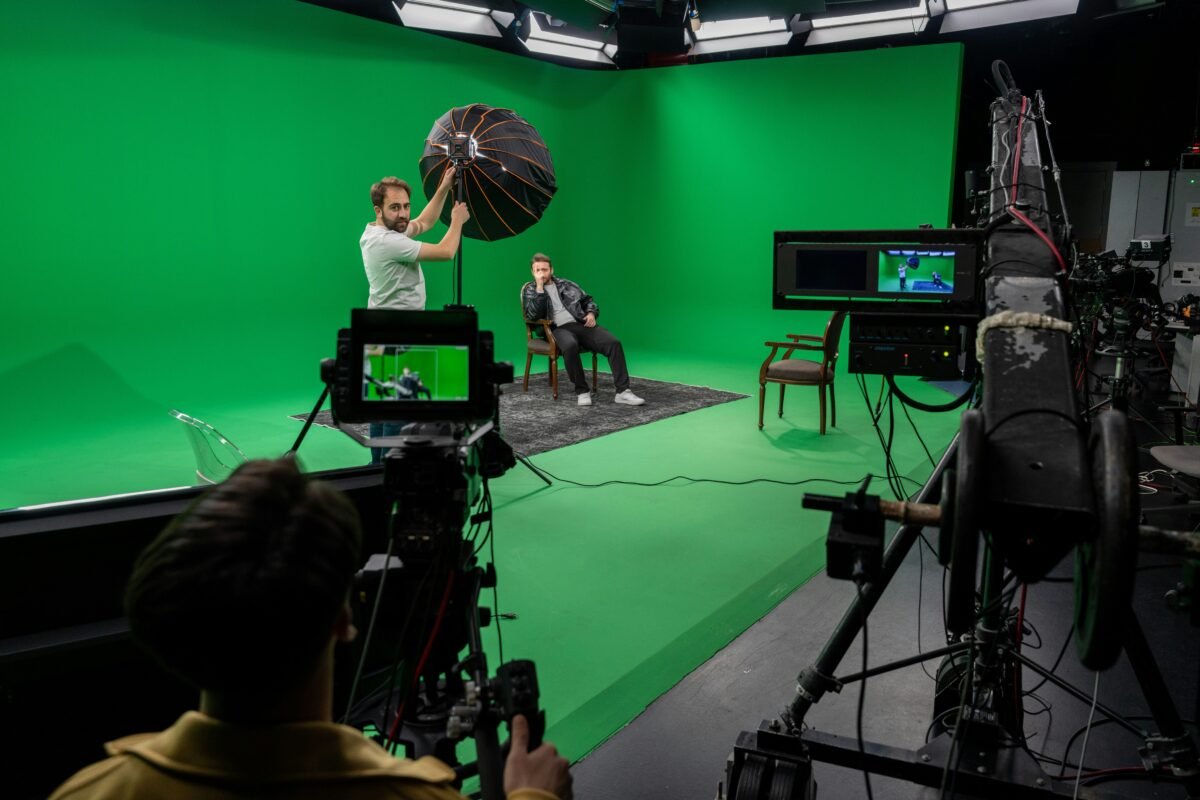
Chromakey — the green screen or blue screen technique — is no longer just for movie studios and broadcast television. It is a standard tool in a wide range of modern photography and video production contexts, and for good reason: it gives you the ability to place your subject in any visual environment imaginable, with complete creative control over the composite result.
But here is the thing that too many photographers and videographers discover the hard way: the quality of your composite work is only as good as the quality of your chromakey photography backdrop.
A cheap, inconsistent green screen creates uneven keying — edges that bleed, color spill that contaminates the subject, and areas where the chroma value shifts enough to make clean extraction genuinely difficult. That means extra hours of masking work in post. It means edges that never look completely right. It means finished composites that have an obviously-keyed quality that undermines the entire point of the technique.
A professional-grade chromakey backdrop from Aavant eliminates those problems. The green and blue colors are matched to broadcast industry specifications — consistent from edge to edge and corner to corner, with no hot spots, no color drift, and no areas of inconsistency that create keying artifacts. They are produced on premium cotton muslin, which absorbs light evenly rather than creating the reflective variation you get with synthetic materials. And they are flame-retardant treated, which matters for commercial studio and broadcast use where compliance requirements apply.
When chromakey backdrops are the right choice:
Video producers and content creators who need to composite subjects against different visual environments. Commercial photographers who shoot product-in-environment composites. Real estate photographers compositing window views. Schools and event photographers offering digital background options. Any studio offering green screen as a service.
What to consider:
Lighting your chromakey backdrop properly is at least as important as the quality of the backdrop itself. The backdrop needs to be lit separately from your subject — evenly, with enough intensity to produce a clean, consistent chroma value — but not so hot that it creates spill that wraps around your subject and contaminates their edges. If you are new to green screen work, invest real time in understanding basic lighting setup for keying before you start booking clients for composite work.
5. Collapsible Twistflex Backdrops — Studio Quality Anywhere You Need It
The traditional fixed photography studio is no longer the only way professional photography happens. On-location portrait work, outdoor sessions, pop-up studios at events, travel photography, and the growth of location-based content creation have created a real need for professional-quality backdrops that do not require a fixed studio space to use.
Aavant’s Twistflex collapsible muslin backdrops were developed specifically for this need. The system allows a full-size professional backdrop — in solid colors, painted designs, or mottled finishes — to collapse into a compact disc that travels easily in a carry bag, then deploys to full size in seconds when you are on location.
These are not cheap, flimsy collapsible reflectors repurposed as backgrounds. These are purpose-built professional backdrop systems on premium Aavant muslin, with the same surface quality and color standards as our full studio range.
When Twistflex backdrops are the right choice:
Photographers who do significant on-location work — headshot photographers who visit corporate clients, family photographers who work at clients’ homes, event photographers setting up portrait stations, travel photographers who need a professional background anywhere they go.
Videographers and content creators who shoot at multiple locations and need a fast-deploying professional background that fits comfortably in their kit bag alongside their camera and lighting gear.
Five Questions to Ask Before You Buy
If you are still not sure which direction to go, these five questions will help clarify your thinking considerably.
1. What is my primary shooting style — and what does it actually demand from a background?
Be honest here. Not what you would like to shoot someday, but what you actually shoot on a regular basis. High-volume portrait work needs consistency and durability above all else. Fine art portraiture needs visual depth and genuine artistic quality. Commercial product photography needs neutral precision. The answer to this question should drive your backdrop choice more than anything else.
2. How is my studio lit — and how will different backdrop types respond to that lighting?
A painted or dyed backdrop in a small, bright studio can look very different from the same backdrop in a larger space with softer, more directional light. Think carefully about how your existing lighting setup will interact with the backdrop surface before you commit to a purchase.
3. What is the realistic lifespan and durability I actually need?
A backdrop being used in a high-volume studio for 50-plus sessions every week needs to withstand constant rolling, hanging, and handling without significant color fading, wrinkling, or damage. Premium 165 GSM cotton muslin is the professional standard for a reason — it is built for sustained use in ways that lighter-weight or synthetic options simply are not.
4. What is the total cost of ownership, not just the upfront price?
A cheaper backdrop that needs replacing every 18 months is not necessarily more cost-effective than a quality investment piece that performs consistently for five to ten years. Factor in replacement cost, lost shooting time, and the consistency of results — not just the price tag on the product page.
5. What visual identity do I want my studio to project — and does this backdrop serve that identity?
Your backdrop choices, accumulated over time, become part of your studio’s visual brand. When potential clients look through your portfolio and see the same quality and character of background in image after image, they start to associate that aesthetic specifically with you. Choose backdrops that reinforce the visual identity you are building, not ones that are simply convenient or inexpensive in the moment.
A Quick Note on Sizing
Getting your sizing right the first time saves you a lot of frustration. Here is a basic framework for thinking through backdrop dimensions.
5 feet wide × 7 feet long — Works for tight head-and-shoulders portraits, but limiting for almost anything else. Appropriate only as a secondary or travel option.
8 feet wide × 10 feet long — The practical starting point for professional studio portrait work. Accommodates single-subject portraits with reasonable flexibility for posing.
10 feet wide × 12 feet long — The sweet spot for most professional portrait studios. Wide enough for two-subject setups like couples or parent-and-child, long enough for some pull-back when needed.
12 feet wide and larger — Required for group portraits, dance photography, full-body fashion work, and any setup where the backdrop needs to fill the entire frame edge to edge.
When in doubt, buy wider than you think you need. Running out of backdrop is a far more common — and frustrating — problem than having too much.
The Maintenance Factor
This does not get talked about enough. A quality muslin studio backdrop, properly cared for, can last for years — potentially a decade or more of regular professional use. One that gets rolled up while damp, stored incorrectly, or cleaned with harsh chemicals will start to degrade far sooner than it should.
The basics are straightforward. Always store your muslin backdrops rolled, not folded. Folds create permanent creases that are difficult to steam out completely. If your backdrop picks up surface dirt, spot-clean with a damp cloth and mild soap — do not machine wash unless the manufacturer specifically states it is safe. Steam works well for removing wrinkles, and cotton muslin responds to it beautifully. When you are not using a backdrop, keep it covered to protect the surface from dust and UV exposure over time.
A quality backdrop is a real investment. Treat it accordingly and it will reward you with years of consistent, dependable performance.
Closing Thoughts
The right muslin studio backdrop does not just make your images look better. It makes your entire studio better — more consistent, more creatively flexible, and more visually distinctive. It removes a source of frustration from your shooting process and replaces it with a reliable, dependable creative tool that works for you every single time.
At Aavant, we have spent almost 30 years making exactly these kinds of backdrops — ones that professional photographers build their studios around and come back to year after year. Whether you are outfitting your first studio or replacing a worn-out old roll with something that will genuinely serve your work for the long term, we would love to help you find the right fit.
Browse our full range of professional muslin studio backdrops at aavant.co.in, or reach out directly at aavant@aavant.co.in if you would like a personal recommendation based on your specific setup and shooting style. We are always happy to talk backdrops.